
Southeast Asia Pathway Flowing Systems
Guiding Inquiry: How do human societies adapt to, shape, and live within dynamic natural and cultural systems?
Key Concepts: Systems · Adaptation · Interconnection · Balance · Human–Environment Interaction
Focus: Life Below Water · Life on Land · Sustainable Cities & Communities · Responsible Consumption
Highlights
The Southeast Asia Pathway invites learners into a term of immersive, place-based learning across Thailand, Vietnam and Sri Lanka, exploring how human societies live within dynamic natural, cultural, and economic systems.
Learning unfolds through coastlines, forests, mountains, markets, temples, and rural communities, with inquiry centred on sustainability, ecology, food systems, trade, and community life. Learners are supported to notice patterns of adaptation and interconnection, exploring how culture, environment, and daily practices shape resilient ways of living.
Alongside this, the pathway offers ongoing exposure to local languages and cultural contexts. While English remains the primary language of facilitation, learners are encouraged to engage with local languages as living systems, through everyday interactions, community encounters, fieldwork, and shared experiences.

Thailand (Oct - Dec '26)
Chiang Dao / Ko Lanta

Sri Lanka (Jan - Mar '27)
Unawatuna / Ella
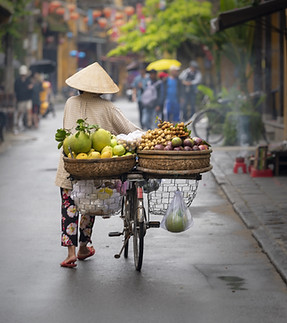
Vietnam (Apr - Jun '27)
Hoi An

05 October - 11 December 2026
Remote Week - 05 Oct - 09 Oct
In-Person - 12 Oct - 27 Nov
Remote Weeks - 30 Nov - 11 Dec
Thailand
Chiang Dao / Ko Lanta
Across mountain and island landscapes, learning explores how natural systems shape human settlement, belief, and livelihood.
Learners explore:
-
Forest, mountain, and marine ecosystems
-
Human–environment relationships in rural and coastal communities
-
Wellbeing, spirituality, and place-based ways of living
-
Tourism, conservation, and economic trade-offs
-
Resource use, resilience, and systems thinking
This term supports learners to consider how different environments demand different forms of adaptation, and how balance, wellbeing, and sustainability are negotiated across contrasting landscapes.
Termly Fee: USD $2,500 - $3,960
Sri Lanka
Unawatuna and Ella
Across coastal landscapes, learning explores how history, belief, and ecology shape community life, resilience, and continuity.
Learners explore:
-
Agricultural landscapes, spice cultivation, and food systems
-
Buddhism, Hinduism, and shared sacred geographies
-
Rural livelihoods and intergenerational knowledge
-
Post-colonial identity, memory, and reconciliation
-
Coastal ecosystems, fisheries, and maritime resilience
This term invites learners to consider how communities sustain culture and livelihood through periods of change, and how land, belief, and relationship to place support recovery, continuity, and future possibility.

04 January - 12 March 2027
Remote Week - 04 Jan - 08 Jan
In-Person - 11 Jan - 26 Feb
Remote Weeks - 01 Mar - 12 Mar
Termly Fee: USD $2,500 - $3,960

29 March - 04 June 2027
Remote Week - 29 Mar - 02 Apr
In-Person - 05 Apr - 21 May
Remote Weeks - 24 May - 04 Jun
Vietnam
Hoi An
In Hoi An, learning focuses on systems of exchange shaped by trade, craft, and community life across generations.
Learners explore:
-
River systems, flooding, and urban adaptation
-
Craft traditions, material culture, and local economies
-
Markets as social, cultural, and economic systems
-
Heritage conservation in a living town
-
Storytelling, identity, and continuity through place
This term invites learners to reflect on how communities preserve knowledge while responding to change, and how living heritage continues to shape contemporary life.
Termly Fee: USD $2,500 - $3,960
The world in motion is our classroom
We are currently taking expressions of interest for the Global Classroom (2026–27).
An expression of interest is not a commitment — it simply helps us understand who this pathway might serve best, shape group size, and confirm facilitation and logistics. Families who register their interest will be the first to receive updates, detailed timelines, and invitations to upcoming information sessions.

Programme Cost
The Global Classroom programmes are priced at USD $3,960 per term. Each term includes 7 weeks of in-person learning and 3 weeks of guided remote support. The fee for the Roots program is USD $2,500 per term.
This structure reflects how the programme is designed: while many operational and facilitation costs are concentrated during the in-person weeks, learning is supported across the entire term through planning, guidance, resources, and continuity. A consistent weekly cost also provides clarity and stability for families planning longer-term travel and homeschooling.
Your contribution supports:
-
experienced, fairly paid facilitators
-
thoughtful curriculum design and academic scaffolding
-
the Companion Booklet, which provides structured prompts, inquiry pathways, and reflection tools to support learning both during and beyond in-person weeks
-
learning resources and facilitated field experiences
-
collaboration with local guides, artisans, and community partners (where relevant)
-
safe, ethical, and well-organised programme coordination
The Companion Booklet is a core part of the programme and is designed to sit alongside homeschooling, helping learners document progress, develop skills, and continue inquiry independently at home or while travelling.
What is not included:
-
Food and daily meals. From time to time, food may be prepared or shared as part of place-based learning, cultural exploration, or group activities.
-
Transport outside of the project hours (including flights, local transfers, or accommodation-related travel)
Families remain responsible for these elements, allowing flexibility and choice that suits individual travel plans and needs.
We are committed to ensuring that the majority of programme fees are directed toward educational delivery, facilitation, and learner support, not profit. Our pricing reflects the real cost of running a high-quality, relational learning programme that complements homeschooling rather than replacing it.