
South America Pathway Living Landscapes
Guiding Inquiry: How do landscapes, cultures, and knowledge systems evolve together to sustain life across generations?
Key Concepts: Interdependence · Sustainability · Resilience · Cultural Continuity
Focus: Life on Land · Clean Water & Ecosystems · Sustainable Communities
Highlights
The South America Pathway invites learners into a year of deep, place-based learning across Peru, Argentina and Chile, exploring how landscapes, cultures, and knowledge systems sustain life across generations.
Throughout the year, learning unfolds through forests, lakes, mountains, farms, and coastal communities, with sustainability, food systems, biodiversity, and cultural continuity at the heart of the inquiry. Alongside this, the programme is designed as a Spanish immersion experience, supported by a fluent Spanish-speaking facilitator who lives and works bilingually within the learning community.
While the programme is delivered in both English and Spanish, learners are continually encouraged to engage with Spanish as a living language, through daily interactions, community engagement, fieldwork, and shared projects. Families do not need to be Spanish speakers to take part; the intention is that, over the course of the year, learners build confidence, fluency, and cultural understanding through authentic immersion rather than formal classroom instruction.
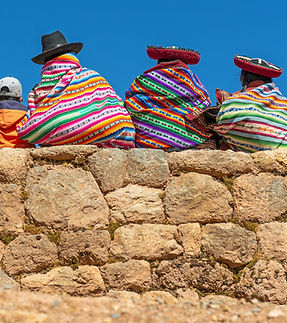
Peru (Oct - Dec '26)
Pisac, Sacred Valley

Argentina (Jan - Mar '27)
San Martín de los Andes

Chile (Apr - Jun '27)
Pucon

05 October - 11 December 2026
Remote Week - 05 Oct - 09 Oct
In-Person - 12 Oct - 27 Nov
Remote Weeks - 30 Nov - 11 Dec
Peru
Sacred Valley – Pisac
In the Sacred Valley, learning shifts toward human systems shaped by thousands of years of adaptation.
Learners explore:
-
Highland agriculture, terraces, and water management
-
Andean cosmology and Pachamama (earth stewardship)
-
Textile traditions, natural dyes, and material culture
-
Markets as economic, social, and cultural systems
-
Archaeology and living history.
This term invites learners to consider how knowledge survives, how communities adapt across generations, and what modern societies can learn from ancestral practices.
Termly Fee: USD $2,500 - $3,960
Argentina
San Martín de los Andes
We begin the year immersed in the Patagonian lake district, where water, forest, and mountain systems shape daily life.
Learners explore:
-
Freshwater ecosystems and lake ecology
-
Forest systems, biodiversity, and seasonal cycles
-
Indigenous Mapuche culture and land stewardship
-
Organic farming, food systems, and self-sufficiency
-
Movement through landscape: hiking, paddling, navigation and horse riding
This term centres on observation, independence, and grounding, helping learners build confidence, routines, and a deep sense of place while learning how ecosystems support human life.
Termly Fee: USD $2,500 - $3,960

04 January - 12 March 2027
Remote Week - 04 Jan - 08 Jan
In-Person - 11 Jan - 26 Feb
Remote Weeks - 01 Mar - 12 Mar

29 March - 04 June 2027
Remote Week - 29 Mar - 02 Apr
In-Person - 05 Apr - 21 May
Remote Weeks - 24 May - 04 Jun
Chile
Pucon
The final term explores threshold spaces — between land and sea, tradition and change, stability and adaptation.
Learners explore:
-
Forest, lake, and geothermal systems in southern Chile
-
Coastal ecosystems, tides, and marine food systems
-
Fishing cultures, preservation methods, and seasonal living
-
Myths, folklore, and storytelling as knowledge systems
-
Community resilience and cooperation in remote environments
This term challenges learners to think about adaptation, resilience, and responsibility, preparing them to synthesise learning from the year and reflect on their own role within global systems.
Termly Fee: USD $2,500 - $3,960
El mundo es nuestro aula
Spanish Immersion & Bilingual Learning
Spanish is not treated as a separate subject within the South America Pathway — it is the language of daily life.
Learning is intentionally bilingual. English remains available for clarity, reflection, and deeper conceptual understanding, while Spanish is used consistently and meaningfully in real-world contexts. Learners are supported to take risks, communicate imperfectly, and grow through use.
The aim is not short-term exposure, but long-term fluency through immersion. Over the course of the year, learners move from comprehension to confident expression, developing Spanish as a practical, social, and cultural tool.
We are currently taking expressions of interest for the Global Classroom South America Pathway (2026–27).
An expression of interest is not a commitment — it simply helps us understand who this pathway might serve best, shape group size, and confirm facilitation and logistics. Families who register their interest will be the first to receive updates, detailed timelines, and invitations to upcoming information sessions.

Programme Cost
The Global Classroom programmes are priced at USD $3,960 per term. Each term includes 7 weeks of in-person learning and 3 weeks of guided remote support. The fee for the Roots program is USD $2,500 per term.
This structure reflects how the programme is designed: while many operational and facilitation costs are concentrated during the in-person weeks, learning is supported across the entire term through planning, guidance, resources, and continuity. A consistent weekly cost also provides clarity and stability for families planning longer-term travel and homeschooling.
Your contribution supports:
-
experienced, fairly paid facilitators
-
thoughtful curriculum design and academic scaffolding
-
the Companion Booklet, which provides structured prompts, inquiry pathways, and reflection tools to support learning both during and beyond in-person weeks
-
learning resources and facilitated field experiences
-
collaboration with local guides, artisans, and community partners (where relevant)
-
safe, ethical, and well-organised programme coordination
The Companion Booklet is a core part of the programme and is designed to sit alongside homeschooling, helping learners document progress, develop skills, and continue inquiry independently at home or while travelling.
What is not included:
-
Food and daily meals. From time to time, food may be prepared or shared as part of place-based learning, cultural exploration, or group activities.
-
Transport outside of the project hours (including flights, local transfers, or accommodation-related travel)
Families remain responsible for these elements, allowing flexibility and choice that suits individual travel plans and needs.
We are committed to ensuring that the majority of programme fees are directed toward educational delivery, facilitation, and learner support, not profit. Our pricing reflects the real cost of running a high-quality, relational learning programme that complements homeschooling rather than replacing it.